Fire safety is one of the most important considerations in any residential or commercial building. While smoke detectors and fire alarms play a critical role in emergency situations, properly installed fire rated doors can significantly improve occupant safety by helping slow the spread of fire and smoke between rooms and building sections.
Whether you’re building a new home, renovating an existing property, or managing a commercial project, understanding how fire rated interior doors work can help you choose the right solution for your needs. In this guide, we’ll explain everything you need to know about fire ratings, door types, applications, and the benefits of choosing prehung fire rated doors for your next project.
What Are Fire Rated Interior Doors?
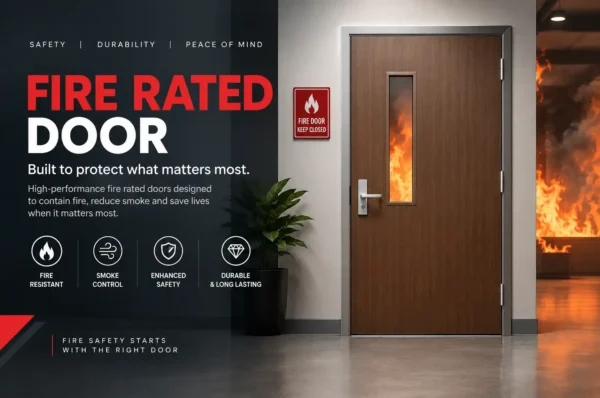
Fire rated interior doors are specially designed and tested door assemblies that help resist the spread of fire and smoke for a specified period of time. Unlike standard interior doors, these doors are manufactured using fire-resistant materials and are tested to meet strict safety standards.
The purpose of interior fire rated doors is to compartmentalize a building during a fire event, helping protect escape routes and providing valuable time for occupants to evacuate safely.
Today’s fire rated doors are available in a wide range of styles and finishes, allowing homeowners and builders to maintain attractive interior designs without compromising safety.
How Do Fire Rated Doors Work?
A fire rated door is more than just the door slab itself. Fire-rated performance depends on a complete assembly that may include:
- Fire rated door slab
- Fire rated frame
- Approved hinges
- Latching hardware
- Smoke seals
- Fire certification labels
When installed correctly, these components work together to help prevent flames, smoke, and heat from quickly spreading throughout a building.
Many modern fire rated interior doors are also designed to maintain structural integrity during elevated temperatures, helping keep escape routes accessible during emergencies.
Understanding Fire Door Ratings
One of the most common questions homeowners ask is how fire ratings work. Fire ratings indicate the amount of time a door assembly has been tested to withstand fire exposure under controlled conditions.
20 Minute Fire Rated Doors
20 minute fire rated doors are among the most common options used in residential construction. These doors are often installed between attached garages and living spaces where building codes require a minimum level of fire protection.
Benefits of 20 minute fire rated doors include:
- Enhanced safety
- Residential code compliance
- Attractive design options
- Affordable fire protection
For many Canadian homeowners, a 20 minute fire rated door provides an excellent balance of safety and aesthetics.
45 Minute Fire Rated Doors
A 45-minute rating is commonly specified for certain commercial and multi-family applications. These doors provide increased protection where additional fire resistance is required.
60 Minute Fire Rated Doors
60 minute fire rated doors are frequently used in institutional and commercial buildings where greater fire containment is necessary.
90 Minute Fire Rated Doors
90 minute fire rated doors provide one of the highest levels of fire protection commonly used in commercial construction. These doors are often found in:
- Stairwells
- Mechanical rooms
- Utility areas
- Industrial facilities
- High-occupancy buildings
When selecting a fire rating, always consult local building codes and project requirements.
Types of Fire Rated Doors
Not all fire rated doors are the same. Different applications require different door styles and construction methods.
Prehung Fire Rated Doors
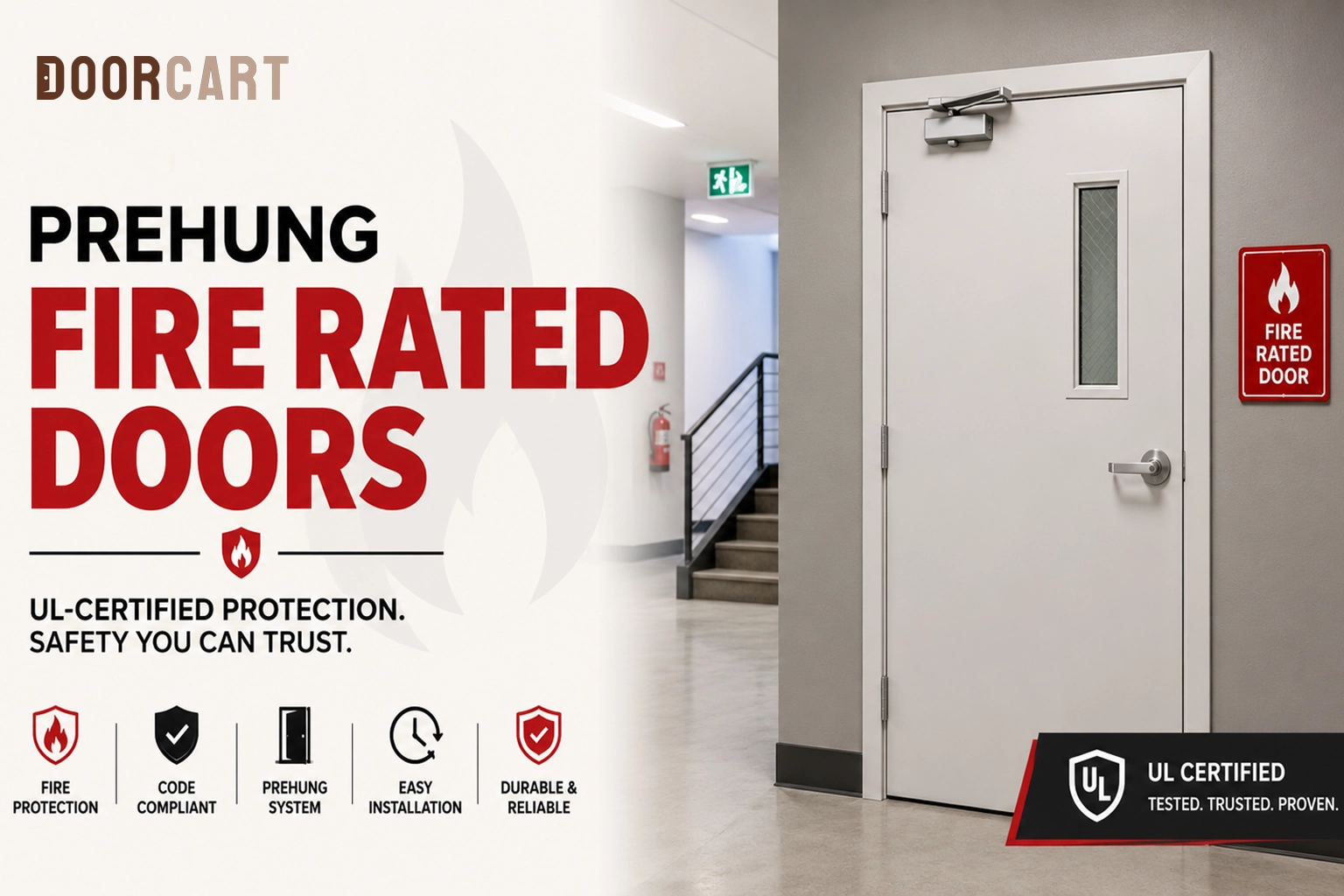
Prehung fire rated doors are supplied as a complete door-and-frame assembly. Because the frame is factory matched to the door, installation is often faster and more accurate compared to slab-only options.
Benefits of fire rated prehung doors include:
- Easier installation
- Better alignment
- Improved code compliance
- Reduced installation errors
- Complete tested assembly
Many contractors prefer prehung fire rated doors because they simplify installation while helping maintain the door’s certified fire rating.
Fire Rated Slab Doors
A slab fire door includes only the door panel itself. The installer must provide a compatible fire-rated frame and hardware to maintain compliance.
Solid Core Fire Rated Doors
Solid core fire rated doors provide enhanced durability and sound control while offering fire-resistant performance. These doors are commonly used in residential and commercial projects.
Steel Fire Rated Doors
Steel fire doors are often selected for commercial and industrial environments where durability and security are top priorities.
Where Are Fire Rated Doors Required?
Building codes vary by jurisdiction, but fire rated interior doors are commonly required in several locations.
Residential Applications
Many homes require fire rated doors in specific locations, including:
- Garage-to-house entrances
- Basement suites
- Secondary dwelling units
- Utility rooms
- Furnace rooms
Installing a properly rated fire rated door can help improve safety while supporting compliance with local regulations.
Commercial Applications
Commercial buildings often require fire rated doors throughout the property, including:
- Offices
- Apartment buildings
- Schools
- Hospitals
- Hotels
- Warehouses
- Retail facilities
The required fire rating will depend on the building type and occupancy classification.
Benefits of Installing Fire Rated Interior Doors
Enhanced Occupant Safety
The primary benefit of fire rated interior doors is improved life safety. By slowing the spread of fire and smoke, these doors can provide critical evacuation time during emergencies.
Better Property Protection
Containing fire within a specific area can help reduce overall property damage and potentially lower repair costs.
Building Code Compliance
Many residential and commercial projects require fire rated doors to meet code requirements. Choosing the appropriate fire-rated assembly helps support compliance and inspection approval.
Long-Term Durability
Most fire rated doors are built with robust construction methods and high-quality materials designed to withstand daily use.
Improved Property Value
Installing UL-certified fire rated doors can enhance the overall quality, safety, and marketability of a property.
UL Certified Fire Rated Doors Explained
When shopping for fire rated interior doors, you’ll often see references to UL certification.
UL-certified doors have been tested to recognized fire safety standards and carry a label indicating their approved fire rating. Choosing UL certified fire rated doors helps ensure the product has undergone rigorous testing for fire resistance and performance.
Homeowners, builders, and commercial property managers often prefer UL certified fire rated doors because they provide confidence in the door’s tested capabilities.
How to Choose the Right Fire Rated Door
Selecting the right fire rated door depends on several factors.
Fire Rating Requirements
Determine whether your project requires:
- 20-minute fire rated doors
- 45-minute fire rated doors
- 60-minute fire rated doors
- 90-minute fire rated doors
Installation Method
Many property owners choose prehung fire rated doors because they provide a complete, ready-to-install system.
Door Style
Modern fire rated interior doors are available in:
- One-panel shaker designs
- Two-panel shaker styles
- Flush doors
- Contemporary profiles
- Traditional designs
Residential or Commercial Use
Different projects may require different construction standards and fire ratings.
Why Prehung Fire Rated Doors Are a Popular Choice
Among all available options, prehung fire rated doors continue to be one of the most popular choices for homeowners and contractors.
Because the frame and door are supplied together, installation is often more efficient. Proper alignment also helps maintain the integrity of the fire-rated assembly.
Additional benefits include:
- Factory-prepared door systems
- Improved fit and operation
- Reduced labour time
- Consistent performance
- Better long-term reliability
For many residential and commercial projects, fire rated prehung doors offer the ideal combination of safety, convenience, and value.
Fire Rated Doors vs Standard Interior Doors
While standard interior doors may look similar, they are not designed or tested to withstand fire exposure.
Key differences include:
- Fire resistance testing
- Certified ratings
- Reinforced construction
- Approved hardware requirements
- Smoke containment capabilities
Choosing certified fire rated interior doors provides an added layer of protection that standard doors cannot offer.
Conclusion
Investing in high-quality fire rated doors is one of the most effective ways to improve building safety while supporting code compliance. Whether you’re looking for fire rated interior doors, UL certified fire rated doors, or prehung fire rated doors, selecting the right fire-rated assembly can provide long-term protection and peace of mind.
From residential garage entryways to commercial buildings and multi-family properties, modern fire rated doors combine safety, durability, and attractive design options. By understanding fire ratings, installation methods, and application requirements, you can confidently choose the right door solution for your project.
Frequently Asked Questions
What is a fire rated door?
A fire rated door is a specially tested door assembly designed to help resist the spread of fire and smoke for a specified period.
What is a 20 minute fire rated door?
A 20-minute fire rated door is tested to resist fire exposure for up to 20 minutes under standardized testing conditions.
What is the difference between a slab door and a prehung fire rated door?
A slab door includes only the door panel, while prehung fire rated doors include both the door and frame as a complete assembly.
Are fire rated doors required between a garage and a house?
Many building codes require fire protection between attached garages and living spaces. Requirements vary by location.
Are all fire rated doors UL certified?
Not all fire rated doors are UL certified, but many high-quality products undergo UL testing and certification.
Can fire rated interior doors be used in homes?
Yes. Many homeowners install fire rated interior doors in garages, basements, utility rooms, and secondary suites.
How long do fire rated doors last?
With proper installation and maintenance, quality fire rated doors can provide many years of reliable performance.
Do fire rated doors need special hardware?
Yes. Fire-rated assemblies often require approved hinges, latches, and other components to maintain compliance.
What fire rating do I need?
The required rating depends on local building codes and project specifications.
Why choose prehung fire rated doors?
Prehung systems simplify installation, improve alignment, and help maintain the tested fire-rated assembly.